How to Live in Your Home During a Major Renovation: A Middlesex County NJ Homeowner's Guide

Middlesex County Homeowners Are Finding Ways to Stay Home During Major Renovations
Home renovation activity continues to evolve across Middlesex County, NJ. Homeowners are updating older properties, expanding living areas and reworking floor plans to better match the way their families live. For many households, moving out during construction is not practical. Work schedules, school routines and the cost of temporary housing can make staying home the more appealing option.
Living through a major renovation can work. However, it requires more planning than simply covering furniture and moving a few belongings. Construction can affect access to rooms, daily schedules, indoor air quality, storage and household safety.
A successful renovation experience begins with understanding how construction will change your everyday routine. Homeowners should work with their contractor to establish clear boundaries between the construction area and the parts of the home that remain occupied.
For Middlesex County homeowners, this planning is especially important when renovating older homes or completing projects that involve kitchens, bathrooms, additions or multiple rooms at once. The goal is not simply to survive construction. It is to create a temporary living arrangement that keeps the household functional while the work progresses.
Decide Which Parts of the Home Will Remain Livable

Before construction begins, identify the rooms that will remain available throughout the project. This creates a clear separation between your living space and the active construction zone.
A major renovation may temporarily eliminate access to important areas of the home. If the kitchen is being remodeled, for example, you may need to create a temporary food preparation area. If several bedrooms are affected, the household may need to reorganize sleeping arrangements.
Consider these questions before work starts:
- Which rooms will remain accessible?
- Where will the family eat?
- Where will meals be prepared?
- Which bathroom can be used?
- Where will clean clothing and personal items be stored?
- What areas will be completely restricted?
- How will workers enter and leave the property?
Creating a temporary floor plan can make the transition much easier. Your contractor can also explain which areas may become unavailable as different phases of construction begin.
Create a Temporary Kitchen During a Kitchen Renovation
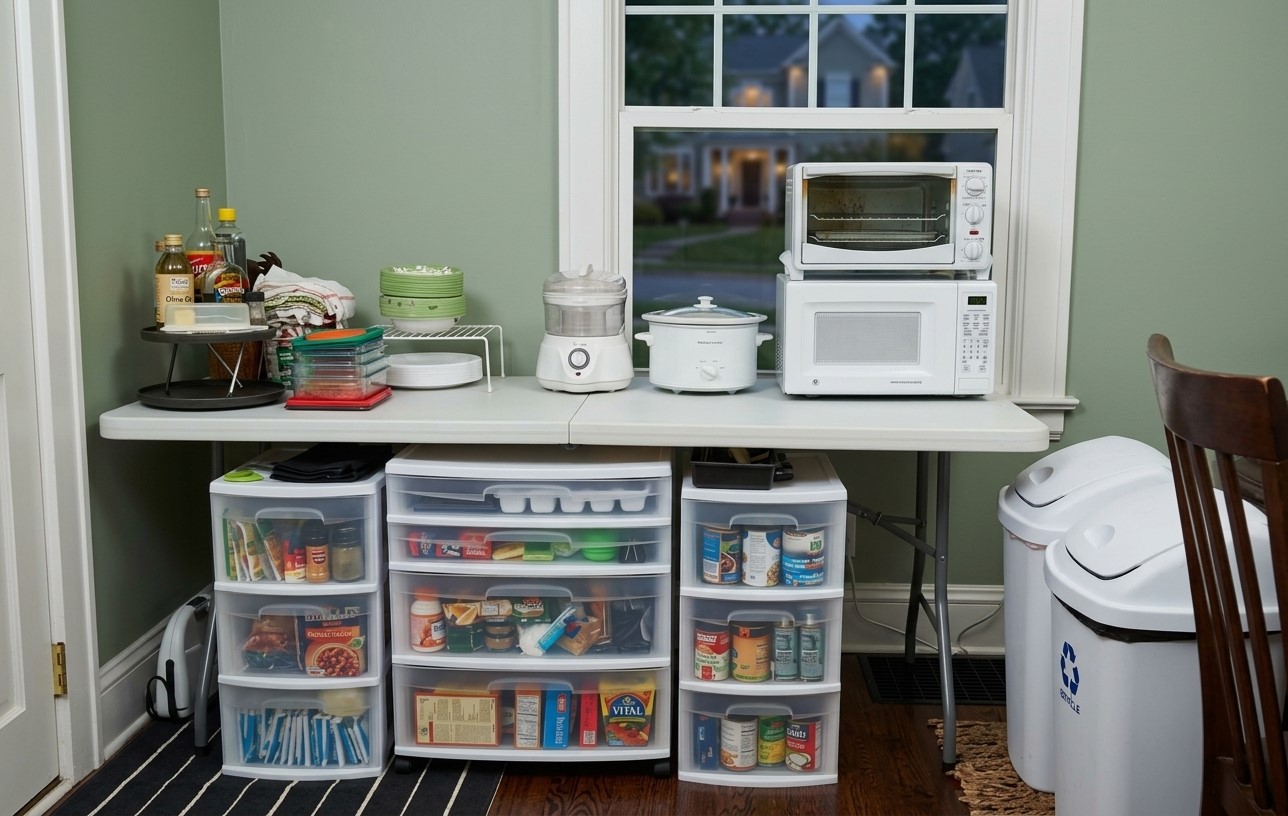
The kitchen is often the most difficult room to lose during a major renovation. It is one of the most frequently used spaces in a home. Even a well-organized household can struggle without a refrigerator, sink, cooking surface and normal food storage.
A temporary kitchen does not need to replicate your existing kitchen. It needs to support basic daily needs.
A practical setup might include:
- A small refrigerator
- Microwave
- Coffee maker
- Electric cooking appliance
- Countertop or folding table
- Basic dishes and utensils
- Water access
- Storage containers
Choose a location away from construction dust and traffic. A dining room, basement or finished portion of the home may work depending on the layout.
Keep the temporary kitchen simple. Store only the items you use regularly. This reduces clutter and makes cleaning easier.
If plumbing or electrical work will affect other parts of the house, ask your contractor about temporary service arrangements before demolition begins. Planning ahead can prevent unnecessary interruptions.
Protect Your Family From Construction Hazards

Safety should be the first consideration when living in a home under renovation. Active construction areas can contain exposed wiring, tools, nails, debris and unfinished surfaces.
Children and pets should never have unrestricted access to construction zones. Establish physical barriers whenever possible. Doors, temporary walls and other appropriate protections can help separate occupied areas from active work zones.
It is also important to discuss daily site conditions with your contractor. A construction area can change quickly as workers move from demolition to framing, electrical work, plumbing and finishing.
Keep these basic safety practices in place:
- Stay out of restricted work areas.
- Keep children away from tools and materials.
- Keep pets separated from construction activity.
- Do not move temporary barriers without permission.
- Keep emergency exits accessible.
- Report unsafe conditions immediately.
- Follow the contractor's site access instructions.
Your contractor should also explain how workers will access the property and which entrances should remain clear.
Manage Dust, Noise and Indoor Air Quality

Dust and noise are among the biggest challenges of living through a major home renovation. Demolition can create significant dust. Cutting materials can increase airborne particles. Construction equipment can also create noise throughout the day.
Your contractor should have a plan for containing dust and controlling the movement of debris. Homeowners can support that process by keeping personal belongings outside the construction zone and maintaining clear boundaries.
Consider storing valuable or sensitive items in sealed containers. Soft furnishings can also be covered or moved to unaffected rooms.
Ventilation and air filtration may become important depending on the work being completed. Ask your contractor how the construction area will be separated from occupied portions of the home.
Noise requires a different approach. Establish expected working hours before construction begins. This helps your household plan around louder activities.
If someone works from home, students need quiet space or family members have different schedules, communicate those needs early. Your contractor may be able to coordinate particularly disruptive work with the household's schedule when practical.
Keep Daily Routines as Normal as Possible

A renovation can disrupt routines even when the project is well managed. The best way to reduce stress is to establish temporary routines before construction starts.
Try to keep regular meal times, sleeping arrangements and work schedules whenever possible. Give each family member a defined area for personal belongings.
For families in Middlesex County, school and work schedules can make this particularly important. A household may need to leave early in the morning while construction crews arrive later. Planning bathroom access, parking and entrances can prevent unnecessary conflicts.
Create a simple daily system:
- Identify areas that are open each morning.
- Check whether any temporary access changes are planned.
- Keep personal items outside the work zone.
- Follow agreed construction hours.
- Reset the temporary living areas at the end of the day.
Small routines can make a major construction project feel much more manageable.
Protect Your Belongings and Reduce Clutter

Living through construction means your available storage space may become limited. Rooms that normally hold furniture and household items may become part of the work area.
Before demolition begins, decide what needs to stay in the house and what can be stored elsewhere. Moving unnecessary items out of the home can protect them from dust and reduce clutter.
Prioritize:
- Important documents
- Electronics
- Artwork
- Fragile furniture
- Clothing
- Children's belongings
- Sentimental items
- Items that are difficult to clean
Label storage containers clearly. You do not want to search through multiple boxes for something you need every day.
A smaller temporary living area can also make the home feel crowded. Keep only essential belongings accessible during the renovation.
Establish Clear Communication With Your Contractor

Communication becomes even more important when homeowners remain in the property during construction. You need to understand what is happening without interfering with the construction process.
Ask your contractor how updates will be provided. Some homeowners prefer daily conversations. Others may find scheduled weekly updates more practical.
Discuss important details such as:
- Construction hours
- Upcoming demolition
- Temporary utility interruptions
- Changes to entrances
- Areas that will become inaccessible
- Material deliveries
- Major noise-producing activities
- Expected project milestones
A clear communication process can prevent surprises. It also gives homeowners an opportunity to raise concerns before they become larger problems.
The contractor should remain responsible for construction management. Homeowners should avoid entering active work areas simply to inspect progress.
Plan for Temporary Utility Disruptions

Major renovations can require temporary interruptions to electricity, plumbing, heating or cooling. These disruptions should be discussed before work begins.
Ask when utilities may be affected and how long interruptions are expected to last. If a bathroom will be unavailable, understand which alternative bathroom will remain operational.
The same applies to heating and cooling. Construction involving walls, ceilings or mechanical systems can affect comfort in occupied areas.
Having advance notice allows your household to adjust. You may be able to plan meals, work schedules and daily activities around temporary disruptions.
Your contractor should also explain any situations where the home may need to be temporarily vacated. Staying home is not always appropriate during every construction phase. Safety and project requirements should take priority.
Know When Staying Home May Not Be Practical

Some renovations are simply too disruptive for comfortable or safe occupancy. Large-scale structural work, extensive demolition, major utility changes and projects involving most of the house can create conditions that are difficult to manage.
Temporary relocation may make sense when:
- Several essential rooms are unavailable.
- The main electrical system will be disconnected.
- Plumbing will be unavailable for extended periods.
- Dust containment cannot adequately separate living areas.
- Structural work affects occupied spaces.
- Heating or cooling will be unavailable.
- The contractor determines that the site is not safe for occupants.
Leaving temporarily does not mean the renovation has failed. It can sometimes make the project more efficient while giving the household a more comfortable environment.
The decision should be based on the scope of work rather than convenience alone.
Make the Renovation Easier With Early Planning

Living in your home during a major renovation requires preparation. The earlier you make decisions about temporary living spaces, storage, safety and household routines, the easier the construction period can become.
Middlesex County homeowners should think beyond the finished design. The construction process itself deserves attention. A beautiful new kitchen or expanded living area is the ultimate goal. However, reaching that goal requires a temporary plan for everyday life.
Start by discussing your occupancy plans with your contractor during the early planning stages. Explain how your household uses the home. Share work schedules and other practical considerations. This information can help the construction team plan access and sequencing more effectively.
Final Thoughts on Living Through a Major Home Renovation
A major renovation can transform an existing home without requiring homeowners to move permanently. With thoughtful planning, many Middlesex County homeowners can remain in their homes while construction moves forward.
The key is to treat temporary living arrangements as part of the renovation plan. Establish safe boundaries. Create functional temporary spaces. Protect belongings. Prepare for noise and dust. Keep communication open with the construction team.
At Prawdzik Properties, thoughtful planning is an important part of creating a successful renovation experience. From major remodels to additions and comprehensive home improvements, the right approach considers both the finished result and the construction process that makes it possible.
For homeowners planning a major renovation in Middlesex County, preparing for how you will live during construction can make the experience more organized, predictable and manageable.